
Whether you’re looking for a new TV antenna installation or simply want to improve your existing TV signal, installing an outdoor antenna offers plenty of benefits. The benefits range from an improved reception to environmental friendliness.
Indoor vs. outdoor antennas
Getting the best reception from your TV is a big concern, and there are two major types of antennas to choose from: indoor and outdoor. Your antenna type depends on your needs, budget, and local signal strength.
 Indoor TV antennas are usually smaller, more passive, and less expensive than outdoor ones. However, they may not work well in a heavily populated area or when the wind is strong. Some also have gained control.
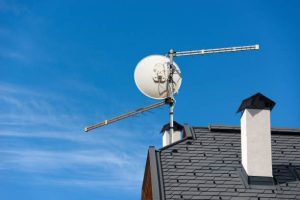
Outdoor TV antennas are larger and designed to be installed on a roof or free-standing pole. They require assembly and must be pointed towards the broadcast tower. They offer better picture quality and audio than indoor TV antennas.
Indoor TV antennas are simpler to set up than outdoor TV antennas. They are also easier to adjust and move around. Depending on the model, they may come with a stand or adhesive pad.
When choosing an indoor TV antenna, look for one with a connector that matches the one on your television. Many will also gain control, allowing you to improve your reception. It is also a good idea to have a power source to ensure the device will work.
When purchasing an indoor antenna, it is recommended that you place it high on a wall. Often, this will be the best location for a reception. Ideally, you will not be near a brick wall or metal objects since these can block the signal.
In addition to the location of the antenna, the cable length can be a factor. A 12-foot to 18-foot coaxial cable will suffice for most people. RG-6 is the preferred cable for the best performance. You can also purchase lead extensions for extra length.
If you live far from a broadcast tower, you should avoid antennas ranging from 100 to 500 miles. For the most part, the best TV antennas will range at least 30 to 50 miles. You can use the FCC’s DTV antenna map if you are unsure where the broadcast towers are located. The map will show the call letters of the local broadcast towers and the relative signal strength.
Improved reception
Having poor TV reception can be frustrating. You can use an antenna to improve the signal. But you must follow the proper instructions to achieve the best results. Several things can cause signal loss.
Your antenna should be aimed directly at the transmission tower. You can use a TV signal strength meter to ensure your antenna is properly aligned. You should also perform a channel scan to get the best possible signal.
You can use a smartphone app to find the transmitting antennas in your area. You should also check your coaxial cable. A bad cable can reduce the strength of the signal. You can also use a signal amplifier to increase the signal.
Some antennas have built-in preamps. This means that the preamp has an FM trap that prevents interference from radio towers. If you don’t have a preamp, you can purchase one separately.
You can install your antenna indoors or outdoors. An outdoor antenna has better reception. It should be at least 10 feet off the ground.
When installing an indoor antenna, it’s important to avoid obstructions. If there are other cables, electrical motors, and objects in the room, they can interfere with the signal. You may improve your antenna’s reception by removing some of these items.
You should also be aware that signal strengths vary from house to house. If your TV is getting poor reception in one room, it may be due to the distance from the broadcast tower. You should try to move the antenna to a different location. You can also experiment with different locations to see where the best reception is.
You’ll have difficulty receiving TV signals if your antenna is not in the correct position. Some antennas may need to be oriented toward the broadcast tower. You’ll need to buy an external digital tuner if you have a TV that doesn’t have a digital tuner.
You may want to turn the amplifier off if you’re using an amplified antenna. Some people have reported improving reception when the amplifier is turned off.
Access to cable networks
A TV antenna is a great way to access cable networks without the monthly fee. It’s also a good way to get a better picture than cable offers. You can even record the show and watch it later.
The television antenna has come a long way in recent years. Some models can connect directly to your television, while others require a tuner. They range in price from $10 to $80.
It’s important to select the right kind of antenna. You’ll want to find an antenna compatible with VHF and UHF frequencies. This is because stations are constantly moving frequencies, and you’ll need to keep up with the change.
You’ll also want to consider the distance from the TV transmitter. Several online tools allow you to do this. You’ll also want to consider the topography of your area. The closer your house is to the broadcast towers, the more reliable the signal will be. You may also need to upgrade to a stronger antenna.